Playing long balls into empty space since 2012.
Showing posts with label Footscray. Show all posts

Tuesday, 23 August 2022

Northumberland and Durham Smoke Night 1922

The Emerald Hill Record (7 October 1922, p2) reported the annual smoke night of Northumberland and Durham United. Some interesting points: 

  1. It's a spotted history of the club's 10 years. 
  2. The recent death of the inaugural chairman Sam Hartley;
  3. We learn that Ben Stevens captained the team for the first 9 years;  
  4. J Lamb was the general dogsbody for the club and a number of others were important to its activities; 
  5. Portable goalposts! I need a description.
  6. Has the epicentre of N. and D. moved away from Footscray (intimated by the function being held in South Melbourne and reported in a local paper)?


SOCCER ENTHUSIASTS.

Hold Annual Social.

The Northumberland and Durham United British Association Football Club (Soccer) held their annual smoke night on Saturday last in the Concordia Hall, South Melbourne. Mr. Albert N. Gay was the chairman, and referred to the position of the club and hoped that all present would have an enjoyable evening. Musical items were rendered by Messrs. Bristow, Craig, Davidson, Grieves, Jones, Lamb, and Thornton. The singing of Mr. Bob Davidson was particularly fine, and brought forth numerous encores. The chairman spoke feelingly on the sad loss the club had sustained owing to the death of Mr. Sam Hartley, who had been the chairman of the club since its formation. He felt sure the club as a body would do all in its power to assist Mrs. Hartley in every, possible way.

Mr. J. Lamb proposed the toast of The Captain and Players, and referred to the pleasure he got, through being connected with the club, every week, although he did have to carry the goal posts and nets and very often had to mark off the ground. However, it was more than pleasing to see 'N. and D. receiving such prominence each year. 

Mr. Ben Stevens (captain) rose to respond amid cries of "Good old Ben!" "Ben the evergreen!" etc., and stated how pleased he was to have the pleasure of responding on behalf of a team which he had captained for the past 10 years with the exception of last season. During those years they had won the League several times and the Dockerty cup twice. Of course, he knew from his long experience that secret of the success of N. and D. was the unanimity between the players and their committee. He could remember when the club first started. He had gone onto the ground with seven or eight men; and often had finished the game with a victory to their credit. (Laughter.) He thanked the committee for their staunch support in the past, and hoped for their continued good service in the future.

The toast of the committee was proposed by Mr. Grieves, and responded to by Mr. Bentley. Mr M. D. Cunningham, the genial and hard-working honorary secretary, spoke of the progress the club had made. During the three years he had been their secretary they had won the League premiership twice, and the Dockerty cup once, which was by no means a por record. He hoped the club would continue along the track of prosperity, and that next year both the cup and the shield would be on the table at their annual smoke night. (Loud cheers.) —'The Vigilante.'


Melbourne Herald (Wednesday 5 July 1922, page 18)


HARTLEY. — On the 4th July. 1922, at his residence. 160 Little Buckley street, Footscray (suddenly). Samuel Hartley. (late president of Northumberland and Durham Football Club), dearly loved husband of Elizabeth Hartley, loving brother-in-law of Mrs. Fletcher, William, Isabel, and the late David Jeffrey, aged 54 years. Deeply mourned and sadly missed. 


This obituary in the Age (18 May 1936, page 1) references some N and D figures.


DARBYSHIRE.—On the 16th May, Henry William, dearly beloved eldest son of William Henry and the late Rebecca Darbyshire, of 23 Garden Vale-road, Caulfield, loving brother of Ernest, Nellie, Marjory, Tina, Stanley, Edith and Rachel. DARBYSHIRE, H. W.— On the 16th May. From him sweet rest, For us just memories. Inserted by his loving father and brother, Stan, DARBYSHIRE.—On the 16th May, Harry, the dearly loved brother of Tina and Wilfred; also loving uncle of Olive, Edna, Lorna, Norman and Jack. Loved ones united. DARBYSHIRE. H. W.-On the 16th May. In silence we remember. —Inserted by living brother, Ern, and Vera. DARBYSHIRE, H. W.— On the 16th May. He giveth his beloved sleep. His tired, weary frame Has found sweet rest at last. —Inserted by his loving sisters, Edie and Rachel. DARBYSHIRE. —On the 16th May, H. W. In mind a silent thought, In heart a secret sorrow. —Marjory and Percy. —Inserted by his loving sister, Marjory, and Percy. DARBYSHIRE, H. W.-On the 16th May. Years fly pas, but his life to us Will always be the sweetest memories. —Inserted by his loving sister, Nellie, and Sid. DARBYSHIRE, H. W.—On the 16th May. in remembrance of my dear brother-in-law Edward Soames; Joyce Soames, Edward Henry Soames. At rest. DARBYSHIRE, H. W.—On the 16th May, in remembrance on behalf of the Northumberland and Durham Soccer Football team, Footscray. A good friend and a great sport.  

Tuesday, 16 August 2022

Robert Walter Pickersgill, Geordie Joiner.

This is the way it goes sometimes:

1. Up early to watch EPL.

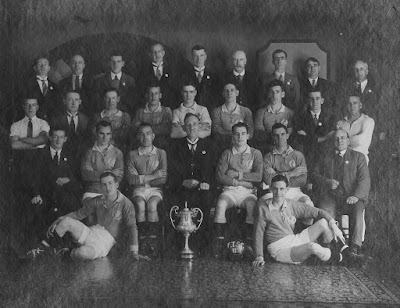
2. Notice a text from Mav alerting me to a comment on facebook from Alan Pickersgill, to which he had attached this gorgeous photo of a Northumberland and Durham team in 1914. His grandfather Robert Walter Pickersgill is third from the right on the second back row.

Robert Pickersgill


3. Respond to Alan, who immediately proceeds to video call from his home in Gateshead, England. We have a long chat in which (after getting rid of the Mackem/Mag banter/formalities) he reveals the bones of a fantastic story.

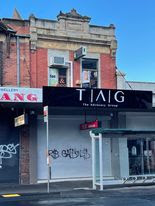
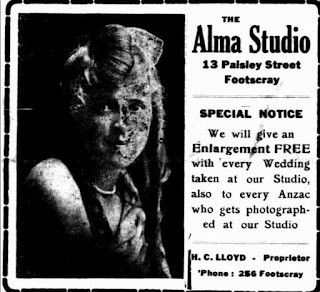
4. Go to Footscray Market (past the car park that once was the site of the Bay View Hotel, which functioned as a dressing room for Northumberland and Durham and most likely in which Robert had prepared for games at Footscray Park), through the market, to take a photo of 13 Paisley St, the site of H.C. Lloyd's Alma Studio, the company that took the team shot.

13 Paisley St, Footscray Presently aTobacco franchise,
the recent tenancy 
history of this address is indicated
by the 
different signage upstairs and down.
5. Have that coffee.

Friday, 5 August 2022

1914 Dockerty Cup Final

The 1914 Dockerty Cup between Northumberland and Durham United and Melbourne Thistle played at Middle Park was a scoreless draw. The replay at the same venue had a similar scoreline even after extra time. A goalless 210 minutes was enough and the decision was made to share the trophy. Harrison in The Winner was not impressed with the games (see below) but I have seen reports that were more glowing. The Argus for example.

The following is the report from The Winner, Wednesday 14 October 1914, page 6


Football

SOCCER PLAYING SEASON CONCLUDED UNSATISFACTORY CUP FINAL

... THE CONTEST Only a few items occurred in the whole course of the two hours' play to send anyone into ecstasies. I had looked forward to far more scientific play than proved to be the case, and was disappointed. True, cup finals as a rule do not produce the best class of football; the players are far too keen and excited, and Saturday last proved no exception to the general rule. There was one thing, however, that was par ticularly noticeable, and that was that the respective goalkeepers — Robison and Russell-— were in great trim, and in that goal-keeping mood which meant that there would be some difficulty in breaking down their defences. And the two hours' play saw the respective goals intact In fact, if anything averted the defeat of the men of Northumber land and Durham it was the superb defence of Robison, who really effected some wonderful saves. Robison was indeed the hero of the hour, and I have seen players of greater pretensions in English League teams who could not have improved upon his display. There is little further to comment upon. The best of the N. and D. side were Robison and Ben. Stevens. Others I liked were Helas, Longthorne. and C. Weston. On the Thistle side, Russell, in goal, did all that was required of him, and Raitt, Guthrie, Bottomley, Brodie and Ackurof [Acquroff] were always prominent. 

A month later, the following images and text were published in the Winner, Wednesday 11 November 1914, page 7


SOCCER FOOTBALL-JOINT HOLDERS OF DOCKERTY CUP, SEASON 1914.

NORTHUMBERLAND AND DURHAM UNITED

Northumberland and Durham United are a team which will have seriously to be reckoned with, in next season's competitions. The players registered in the ranks of the North of England representatives showed brilliant form in the latter part of the season, and in the final tie of the Dockerty Cup held their own with the Thistle Club, the League premiers. Northumberland and Durham United played 18 games in the League Competition, of which they won seven, lost nine, and two were drawn games. Their best form, however, was shown in the Cup competition, and the players appearing in the: above photograph in the final tie of the Dockerty Cup. are — Robinson, Helas,  Longthorpe, Thompson, Stevens, Jefferies, H. Weston, Laycock, C. Weston, Millar, and Marsden.

Mark Boric's more reliable Victorian Football Statistical History gives: Northumberland and Durham United: J.Robison, E.Helas, R.Longthorpe, J.Thompson, B.Stevens, D.Jefferey, H.Weston, Laycock, C.Weston, R.Millar, H.Marsden.


MELBOURNE THISTLE CLUB (Photos, by E. W. Hicks)

The Melbourne Thistle Club has a record to be proud of. To win the League Premiership and become joint possessors with Northumberland and Durham United of the Dockerty Challenge Cup in the same season is a great 'honor indeed. The Scots' Club, has only been in existence three seasons, and has in its ranks many players of exceptional merit.In the League season just closed, Thistle played 18 matches, won 11, lost two, and five were drawn. The team scored 34 goals against 12 obtained by their opponents. Thistle headed the League table with 27 points, to their credit, their nearest opponents being the Birmingham team with 24 points. The Scots' representatives figuring in the final the for the Dockerty Challenge Cup, is given in the above photograph, are— Russell, Thompson, Raitt, Noble, Goodson, Benn, Bottomley, Clulow, Guthrie, Sandy, and Brodie. 

Boric gives: Melbourne Thistle: J.Russell, J.Thompson, G.Raitt, G.Noble, A.Goodson, H.Benn, A.Bottomley, Clulow, J.Guthrie, Sandy, J.Brodie.


Thursday, 3 June 2021

The Trials of George Macaulay

These are three amazing documents sent to me by Val Finlayson. They are form letters (neither personalised nor signed) sent by Harry Bingham inviting George Macaulay to: 

  1. Be selected for an England v Scotland game in 1930 (George was in fact Irish and did not play in the game);
  2. Be available for the Division 1 team to play against the Division 2 team later in the same year. George was in fact selected and helped to create a goal in the first minute of play;
  3. Play in the Victorian team for the Interstate Carnival in Sydney in 1932. The letter also contains travel instructions.
They are remarkable because they give us some insight into bureaucratic and selection practices of the VSFA in the early 1930s. More to come.


But they do more than this. They also give us a picture of the way transport was organised and the extent to which they players were required to supply material that would be provided for them in today's elite level soccer. 

The 'man in Grey' is a curious notion. Apparently (thanks Mav and Adam Muyt) it refers to  a booth at Spenser St Station that was set up to answer traveller's queries and seems to have been a regular meeting point.

Sunday, 30 May 2021

Mapping Footscray's Soccer History

It's growng. Slowly.

My knowledge of Footscray soccer history has grown from zero to really not very much in a year. But 'not very much' is perhaps about as much as anyone else knows. The people who should know: Footscray historians and soccer historians have left it in either the "well I'll be buggered, who'da thunk" box or the "too hard basket". John Lack's history of Footscray, for example, fails to mention the game at all, and the Footscray Historical Society (FHS) had little idea until very recently. To be fair they have welcomed me with open arms and have been particularly supportive, supplying a number of vital leads explored below.

Yet for nearly a 20 year period, bewteen 1914  and the mid 1930s, Footscray, in the form of Northumberland & Durhams and Footscray Thistle, can be fairly described as a driving force of Victorian soccer, one or the other being there at the business end of most senior competitions. The lack of knowledge about the two clubs is not surprising but it remains an annoyance.

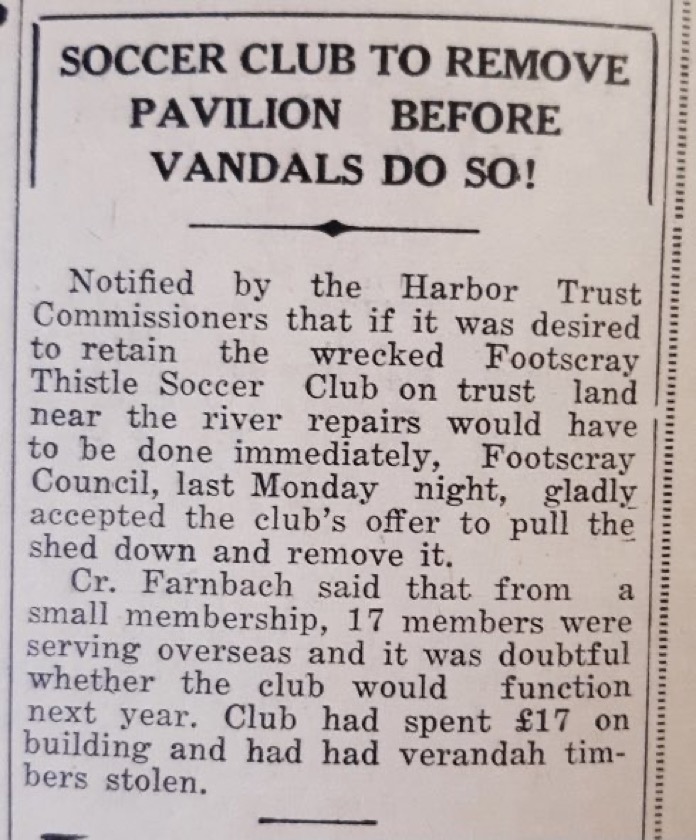
Footscray Advertiser July 1940
From my first engagement with the FHS I obtained 5 photographs of the Footscray Thistle team, discussed here. This led to a meeting with Val Finlayson, daughter of George Macaulay, one of Thistle's prominent players between 1927 and 1939. More recently 'Barbara from FHS' found this little article (right) in the Footscray Advertiser from July 1940. An inordinately sad piece, it described the literal and symbolic moment Footscray Thistle was ended as a club. The vandals didn't destroy the club because it was already on the way out but they helped to precipitate a somewhat pathetic ending to Melbourne's first soccer Super Club.

The advantage of the article is that it located the place of the club's final moment. Some digging in Trove revealed that in 1939 the club's 'new ground' was sited at the 'foot of Napier St', 'next to the Swing bridge'. It was also clear that the club had planted a number of trees (with the Council's approval) near the ground in 1939. The important question was which side of Napier St. The north (pink) or the south (blue).

On Saturday morning 29 May I undertook to try to find and video clues as to the ground's location, producing this 6 minute mini doco on twitter, typically inspiring #sokkahtwitter to chip in. While the general consensus seemed to be that the Southern side was most likely, we could not be sure. Discovering the below aerial shot looking west seems to have solved the puzzle. It places the ground squarely on the south side. The large road in the right foreground which crosses the river is Napier St and the patch of ground to its left seems the only possible space for a soccer ground.

c1939 Footscray looking West, ID: 1528, 
an image owned by the Footscray Historical society

A crop of the above image at the corner of Napier and Moreland Strees.

Well, that's 1939-40 knocked over. The harder job is to work backwards and map them all. We know from documents provided by Val Nicholson, that in 1935-36 the club definitely played out of Yarraville Cricket Club's ground on Williamstown Road. It is likely they also played there all the years from 1932 until 1938. Earlier they played at Yarraville Gardens, and sometimes on Ammunition Flat and a number of other grounds the names of which are rendered unclear in newspaper reports. 

I'm confident we can get there and map the places Footscray Thistle (and Northumberland & Durhams) called home. 


Wednesday, 19 May 2021

Footscray Thistle Images

This mini-trove of Footscray Thistle material comes from the Footscray Historical Society (many thanks!). The photos span the period 1919-1932 and they contain some useful notes from those who donated them. Some confusion exists about the name of the team in various notes. I have used the descriptions and nomenclature from the FHS (which is well worth a visit) and I have kept them the order in which they were sent to me. Some will notice that 'the large trophy' is in fact the Dockerty Cup!

PIc 9110 F.T.S.C. [Footscray Thistle Soccer Club] 1932

Group of boys and men with 10 in soccer uniform with thistle on jersey. The man seated in front row second from the right was Walter Gilbert, a manager at the Parkinson Stove Co (Australia ) Ltd.


Pic 9111 F.T.S.C. [Footscray Thistle Soccer Club] 1930s

Group of men with 10 in soccer uniform with thistle on jersey and a large trophy. The man seated in front row on the right was Walter Gilbert, a manager at the Parkinson Stove Co (Australia ) Ltd.

Pic 9112 [Footscray Thistle Soccer Club] 1930s


Group of men with 10 in soccer uniform with thistle on jersey


Pic 9114 Management at Parkinson Stoves 1930C

Nine members of the management at Parkinson Stove Ltd. in Footscray.


(From John Dell: My Grandfather, Walter Gilbert moved to Australia in the 1920s to help set up the Parkin Stove Company Factory. While there he helped run the Footscray Harriers Football team. - These are photos from the family collection - The striking girl on horseback is not a known family member - the photo is labelled "Pauline - Footscray". My grandfather is the bald man in the light suit second from the right in the front seated row in the "Footscray Harriers" image and on the left of the "Parkin Stove Management" photo. He had served at Gallipolli as a private in the Warwickshire Regiment and had then fought the Turks again in Mesopotamia (modern day Iraq) where he was captured in the attempt to relieve the British and Indian Division surrounded at Kut. - He endured years of captivity by the Turks (statistically you had a much higher chance of surviving as a prisoner of the Japanese in World War Two than as a Prisoner of the Turks in World War One!)).

I hope the images are of interest, and might find a place in your archive, if they are not there already. Note: The images supplied labelled Harriers were actually of the Footscray Thistle Soccer Club.)

Parkinson Stove was at Sunshine Road Footscray West in 1957.


Pic 9158 1919

Group of 26 men, some in soccer uniform and some in suits.
A large trophy cup is in the foreground.

[The owner of this post card sized image, noted that her mother was told that the club was formed before World War 1 and that the players were all Scottish lads most of whom signed up together to fight in WW1.]

Pic 4002 [1927]

Two team photos, one players shaking hands 
FDSC 1927, Footscray District Soccer Club


Val Finlayson contacted me to let me know the her dad, George Macaulay and his brother Jack are in the above two teams shots. She replied to my fb post in Lost Footscray, saying that in "1927 photo my father, George Macaulay is 3rd from the left, middle row. His brother Jack is first in the middle row."

On a further post originated by Val in Lost Footscray she put up these two images with her comments below them: 

Thistles soccer team, my father, George Macaulay is in the middle of the top row. Year?

My father’s soccer medallions - left to right, 1927 Dockerty cup, 1928 Northern Section winners, 1930 Dockerty cup, 1932 Dockerty cup, no inscription.


This is a sobering reminder of the collapse of Footscray Thistle. Vandals attack the clubhouse while 17 of their members are away fighting in WW2. The piece is from the Footscray Adverstiser cJuly 1940


Thistle team lists 1 June 1928

Footscray. — Parker, A. Lyons, McGregor, Ballantine, Calderwood, R. Lyons, Templeton, Bellingall, W. Wilson, Orr, Robb. Reserves: W. McKelvie, G. McAuley. Reserve team— Pateman. A. McLean, Beveridge (new man) Jim Wilson, Morton, Fulton, S. McKelvie, John Wilson. A. Robb. Wilkinson, Rhind. Reserves: Craig, Mills. Simmonds, Mackerras.

Monday, 3 May 2021

George Macaulay

Paul Mavroudis thinks that I research soccer in order to discover my roots in a mining village in Durham, and this explains my Weston obsession. Maybe he's right. This thought occurred to me as I retraced my origins in Melbourne on the Number 1 tram on Saturday morning as I visited Val Finlayson at Albert Park, just two streets away from my first residence in Melbourne.

Val is the daughter of George Macaulay who played for Footscray Thistle for more than a decade between 1927 and the Second World War. Val had noticed that I put some photographs on the Lost Footscray Facebook site and contacted me letting me know that one of the people in the photographs was her father. I subsequently chatted with Val on the phone and arranged to meet her at brother Ed's place in Albert Park to talk about her father and to look at some of the artefacts and photographs he left.

Initially I surmised that Val must have been quite old, perhaps even in her 90s. It turns out that she was the first baby from a late marriage. Her parents married in November 1941 and her father George enrolled in the army a month later, training in Puckapunyul and Bonegilla for a year before serving in New Guinea. Val didn't meet her father until after the war in September1945 when she was 3 years old! Meeting Val and her brother Ed was a real privilege; both of them sprightly and active with a keen interest in learning about what I was researching and a real commitment to helping me understand their father's story.

Val and Ed generously provided me with the opportunity to learn about their father's origins and showed me a number of artefacts and photographs that I could copy. Ed was particularly helpful charging up and down the stairs to the scanner to produce high-quality scans of certain items.

Hughes Academy, George top row 3rd left
George
George Macaulay was born on 27 July 1907 in Aghadowey Northern Ireland. The youngest of five siblings growing up in a flax farming family, George was the only child to be educated beyond primary school. He attended the Hughes Academy where he learned to play football. Today, the academy, in Belfast, is a training college for young soccer players. After the untimely death of George’s father in the mid-1920s the family migrated to Australia. They arrived in Melbourne in 1926 and settled at 17 Napier Street in the suburb of Footscray. Despite having trained for the Civil Service George obtained a job as a foundry worker at Metters - a job he retained until the company closed in the 1960s. He then worked at Angliss Meatworks until retirement. Val mentions that he would proudly recount working there with the actor, John Wood.

George's 1930 Dockerty Cup medal
No name inscribed on the back.

In 1927 George, a Presbyterian, was playing with Footscray Thistle, one of Melbourne's champion Scottish-based teams. In sporting terms George must have felt that he had landed on his feet. Over the next five years he would obtain four championship medals (three Dockerty cups and one northern section championship). He also played a number of times for Victoria. Val laughed when she told me about the letter he received inviting him to play for Victoria. “It told him where he needed to be at a particular time on a particular day and to bring his own socks.”

It's clear that Macaulay was an excellent player. He is prominent in match reports throughout the decade. Though it should be said that Footscray Thistle was on something of a decline throughout the decade being relegated to the second tier in 1937.

George Macaulay enlisted in the Australian army in 1941 at the age of 34. He served in New Guinea, shattering his kneecap, contracting malaria, and returning to Australia in September 1945. It appears that George never played an organised game again. Val certainly remembers him kicking a ball in the backyard, showing her some tricks, but she has no memory that includes games of soccer. Perhaps it was the malaria; or the shattered kneecap; or his age, but his soccer career was over. But maybe also it was because he lost his team. A familiar story in Australian soccer is the death of clubs and the despondency and sometimes defection of those who follow them. Footscray Thistle seems to have been one of the war’s many casualties. Of all the teams that were deleted by the war, perhaps Footscray Thistle was the best of them. In any case, George seems to have lost interest in local soccer, preferring to follow the broadcast of English games on his scratchy radio in the back shed or local games of VFL.

Sadly, George’s wife, Valerie died when Val was 10 in 1953. The family moved to 79 Hyde Street Footscray until George's retirement when they moved to 16 Station Street in Blackburn. George Macaulay died in 1997 at the ripe old age of 90.

When it came to George's soccer records, photographs, and medals, Val didn't have a vast number of items. However, the quality of what she has is immense. These included a number of photographs of the Footscray Thistle team and the Victorian State team, some of which I had not seen before. One in particular took my attention because of the width of the
undated picture of the Footscray Thistle team
photograph. In the background we see detail normally excluded from team photos, that might well give us information about the locality of the game. The 1937 program for the English game against Australia excited me because I've never seen anything like it. My excitement was attenuated by realising a copy of it was already on Mark Boric’s Melbourne soccer site. I had seen photos of George’s Dockerty cup and Northern Section medals but to hold them in my hot little hand and be able to photograph the inscriptions on the reverse side was was a thrill. But the big ticket items were . . . little tickets: two tiny blue booklets from 1935 and 1936, called Footscray Thistle member 
1935 and 1936 Member's Tickets
tickets. These little booklets hold so much information as can be seen below: the committee, the season fixtures, the ground that they play on, even the little advertisements for local products contain information available nowhere else. I half-jokingly offered Val $200 for them on the spot. She seriously declined. One item I missed was the letter informing him that he was in the Victorian team, Val having misplaced it.

A wonderful amount of information about Footscray Thistle
 and Victorian soccer in such small bundles
Leaving Val and Ed, a familiar feeling came to me. Having visited many people for such interviews, I was aware of taking a little piece of their personal history. This produces a sense of responsibility and desire to treat the material with care — not in a physical sense in this case, because all I had was photographs and scans of originals and the notes — in an emotional sense. I need to respect the implied trust the siblings have placed in me. I will be pleased if this little piece fits that bill.

More is to be discovered about George Macaulay's personal history and Footscray Thistle’s rise and fall. This piece is my first contribution to the that project.